

Historic Proportions
Mason alumni find home at Gunston Hall
The sprawling 550-acre estate of George Mason, the man, is filled not only with history and tradition, but also with George Mason University alumni. Behind the antique furniture, the cobblestone pathways, and the roped beds, many Mason alumni and students have had a hand in restoring, resurrecting, and replicating Gunston Hall.
Walk this way and find several Mason graduates who will give you a tour of the estate, packed with all kinds of interesting historical information. They make it so fun that visitors often don’t realize they are also learning something. Donna Bafundo, MEd Counseling and Development ’78, volunteers as a docent and has been giving tours for more than 5 years, ever since she retired from the university as director of the Mason Scholars Program.
Bafundo is vice chair of the Gunston Hall Docents Association, and she frequently brings in Mason professors to speak on topics related to the 18th century, such as slavery, the presidents, or burial practices. “I just love it. I’m dedicated to it,” she says. “The more I learn about George Mason, the more fascinated I become.”
Most of tours of Gunston Hall consists of school-aged children, so the docents try to cater to their audience. They also adhere to the Virginia Standards of Learning, which reinforces what elementary school tour groups are covering in social studies. “George Mason was a single dad of nine kids,” Bafundo says. “We talk to the kids about what it was like to live then, how those things impact their lives today.”
Docent Barbara Farner, MA History ’94, says she feels like she’s been giving tours there “since three weeks after George Mason died.” She has also been working on a 10-year project with a team of historians trying to restore Gunston Hall’s interior.
“We want the house to look like it did when George Mason lived there,” Farner, says. When Mason died in 1792, no inventory was taken of his estate, so there is no record of what he owned. To learn the types of things Mason likely owned, Farner and the team began researching the inventories of other 18th-century upper-class families.
They have come across some interesting information that has allowed them to redo the entire inside of the home. Rooms were switched around, and items that did not belong were removed. For example, they found that foot warmers were popular in New England where it got bitterly cold but were not common in Virginia. The entire Room Use Study is available online at the Gunston Hall web site (www.gunstonhall.org).
Outside the home, archaeologists dig through dirt and stone to uncover the mysteries of the gardens. Susan Hardenburgh, BA History ’04, a part-time archaeologist at Gunston Hall, spends her Saturdays analyzing wine bottles, pottery, and other pieces of household items she and the team find buried on the grounds. Currently, they are working on what they believe was once a cobblestone road that led from the house to the wharf.
“We’re finding a lot of glass, oyster shells, nails,” she says. “Part of the thrill is coming across something that no one has seen in 250 years.”
Other alumni not only give tours to the public, but also write historical and educational books. Terry Dunn, MA History ’91 and PhD candidate, edited the recently published John Mason’s Recollections, the first printed edition of the remembrances of George Mason’s fifth son. Lauren Bisbee, BA Area Studies ’90, MA History ’92, wrote Of Land and Labor: Gunston Hall Plantation Life in the 18th Century, which is on sale at the Gunston Hall bookstore. Bisbee works as an interpreter at Gunston Hall.
Even the home’s web site and library are organized by a Patriot. Kevin Shupe, who is pursuing his PhD in history from Mason, has been working at Gunston Hall for eight years. Shupe says the job not only helps him with his education, but that the estate itself is a beautiful place to be. “Gunston Hall, along with the state and local parks surrounding it, preserve around 5,000 acres, making Mason Neck one of the few places in the area to get away from the hectic mass of suburbia.”
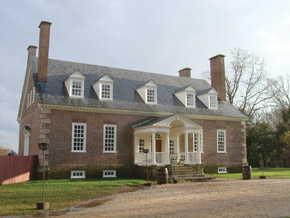
Gunston Hall