The Power of Partnerships
Why a new approach to research could create a biotech boom in Northern Virginia
George Mason University has analyzed its SWOTs—strengths, weaknesses, opportunities, and threats—in the area of research and has come up with many more S’s and O’s than W’s and T’s.
That’s not to say there aren’t challenges, says Matt Kluger, vice president for research and economic development. He says that the academic model of research is traditionally centered on independent professional achievement as faculty members work to build their own portfolios to secure tenure.
“But in an industrial environment, companies often recruit individuals who are better at working within a team because they understand that to solve complex problems, you need team players,” says Kluger.
While Kluger sees Mason as “pretty collaborative,” he thinks a new approach is in order.
Research Wrapped around a Theme
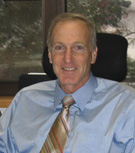
Matt Kluger
When Kluger became vice president for research at the Medical College of Georgia, he decided to break down the barriers between the schools. He created a think tank to set up thematic areas of research and then recruit researchers in these areas across the schools, an approach he says was quite successful.
Kluger believes Mason is well on its way to implementing this approach based on its existing strengths and recent recruits. He names biomedical research as one such thematic area, made strong with last year’s addition of two outstanding scientists in molecular medicine, Lance Liotta from the National Institutes of Health (NIH) and Emanuel Petricoin III from the U.S. Food and Drug Administration, to an already distinguished faculty.
Within the relatively short time that this dynamic duo has been at Mason, they have established numerous collaborations on and off campus and disclosed numerous discoveries to the Office of Technology Transfer. Not only will their research affect the way clinical research is done in the United States and the world, but it is also likely that the work that emanates from this team will also lead to the creation of successful biotechnology companies in Northern Virginia.
Another thematic area is neuroscience research, already taking place at the Krasnow Institute for Advanced Study. Mason’s strong Psychology Department also has a major stake in this area. The recent expansion of the Krasnow Institute, with approximately 12,500 square feet of new laboratory space set to come on-line by January 2007, will markedly increase the pace of discovery in the neurosciences on the Fairfax Campus.
Rehabilitative science is a thematic area that ties in nicely with biomedical research and neuroscience and is another focus on campus. Mason’s newly reorganized and renamed College of Health and Human Services is home to that discipline—and now home to Naomi Lynn Hurwitz Gerber, the former chief of rehabilitation medicine at NIH. Gerber has already established excellent ties with colleagues around the university and at neighboring hospitals, and her program should help build bridges between the college and other units on the campus.
The National Center for Biodefense and Infectious Diseases, headed by Charles Bailey, addresses the challenges to national and international security posed by the threat of biological terrorism. Bailey and colleagues were recently awarded a $25 million NIH grant to construct an 83-thousand-square-foot facility that will contain a Biosafety Level-3 laboratory for the development of techniques and products for detecting, diagnosing, preventing, and treating diseases considered by the U.S. government to be potential bioterror threats, such as anthrax, tularemia, and plague, and other infectious diseases, such as SARS, West Nile virus, and influenza. The state will contribute $2.5 million, and overhead from research grants will provide about $15 million toward construction of the lab.
With its strong research programs related to health and medicine, Mason is looking to capitalize on its existing relationship with Inova Health System, known for its outstanding medical staff within a network of hospitals and health care facilities throughout Northern Virginia. A number of collaborative initiatives between the university and Inova already exist, and the two institutions have recently signed an affiliation agreement. As part of this agreement, the two organizations jointly run an annual research symposium that highlights the major discoveries that are the result of the successful partnerships between Inova and Mason.
In addition, Kluger says the biological initiatives will have a heavy dependence on information technology and engineering and sees the Volgenau School of Information Technology and Engineering playing a critical role here.
On another thematic front, Mason shows existing strengths in research involving the global biosphere with its investigations of Earth and space through computational modeling, an area that increasingly captures the public’s interest.
Building Sustainable Research Programs
Mason faculty are doing important work in dozens of research areas that range from public policy to history and new media to information technology to social complexity to neuro-economics and law. In general, the most productive and sustainable programs are those that involve groups of faculty working collegially on research questions. Often these individuals come from different backgrounds, approaching the questions with different skill sets.
To move Mason toward greatness in not just a few research programs but as a nationally and internationally renowned research university, Kluger believes the key will be to continue to recruit and retain faculty who are by their very nature highly collaborative. Faculty will have to be rewarded not only for independent scholarship, but also for their contributions to large team projects.
Mason’s 64 research centers could help spur interdisciplinary work on campus. Kluger predicts that the number of centers will grow over time and a strategy will have to be developed to fund the infrastructure of these centers, some of which may be truly interdisciplinary.
Funding the Research
The major challenge when expanding research is in obtaining substantial funding. But Kluger is not daunted by the task because he’s done it before. In his six years at the Medical College of Georgia, Kluger saw its research base grow from $28 million to more than $80 million as the thematic research approach was implemented. Kluger believes the same rate of growth can occur at Mason. But it won’t be easy.
A physical symbol of Mason’s dedication to research is the new Research I building. The structure is Mason’s first official research building, but it is by no means the last. Kluger is already looking at drawings for Research II, which will be the home of the Volgenau School of Information Technology and Engineering, and beginning to plan for Research III.
These research buildings will be partially paid for by income from grants brought in by the faculty housed within those buildings. So, Kluger says, “a key challenge is for faculty to be encouraged to write grant proposals to funding agencies and not to get discouraged if they don’t get funded on the first or second submission.” The Office of Sponsored Programs has funds set aside to allow faculty to have their major grant proposals externally reviewed to better their chances of getting funding.
“Take the reviewers’ comments seriously, revise the proposal, and resubmit,” says Kluger. “As in most endeavors, the winner is often the individual with the greatest degree of perseverance.”

Above, biochemistry major Minh Nguyen and Chemistry professor Timothy Born work on their research project. Right, Professor Keith Davies and Faisal Anwar are working on research related to diazenium diolates, a class of compounds that are widely used as nitric oxide-generating agents in biomedical research studies.


Psychology professor Susan Bachus and senior Allison Slusser examine images of rats’ brains for a project they are working on together.

Above, Professor Mark Krekeler works in the field with student researchers Stephen Elmore and Cynthia Tselepis on methods to remove pollutants from ground water.