
Professors We Love: Chris Thaiss
By Sabrina Tillman, BA English ’00
Perseverance, discipline, and dedication remain three vital practices that I learned in English class? Yes, because without these virtues, I would not have succeeded in English professor and former department chair Chris Thaiss’s advanced composition class.
In the class, which introduced students to the discriminating rigors of writing for publication, Thaiss was a civilian magician of sorts. He did not pull rabbits from top hats, but he possessed a penchant for trickery of a different kind. At the beginning of the course, we did not suspect that any mortal would have the ability to motivate each of us to focus our attention on one topic, hurdle over writer’s block, discover our voices, and write a 3,000- to 5,000-word essay. He concocted the right potion for each of us, and, one by one, we fell under his spell.
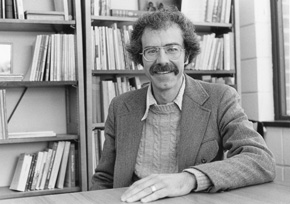
Thaiss personified approachable. Staring thoughtfully through wide-lensed glasses and encouraging focus in a gentle tone, he lingered after class to continue conversations. He preferred to sit with us in a circle, where we would take turns reading and “workshopping” our drafts. Demonstrating constructive practices and patience, Thaiss set the example for an open, friendly classroom environment.
I viewed Thaiss’s instruction as guidance, similar to the way a protractor guides a pencil to create a more concise angle. Self-censorship through a lack of focus and a desire to work out too many details in the predrafting stage remain bad habits that still tend to hold me back. Professor Thaiss provided a remedy for these ills: write about what you know, keep a journal, and try to write something every day.
On the first day of class, Thaiss set a common goal that he challenged each of us to obtain at the conclusion of the class: compose a personal narrative suitable for publication. Now, after years of working as a professional writer and editor, I understand now why Thaiss structured the threshold class for English majors around writing an essay from personal experience. Crafting a piece from memories allows writers to hone important skills, such as developing and progressing the plot and selecting descriptive language, without the added stress associated with writing news stories or other nonfiction. Professor Thaiss introduced me to lessons I learn again and again as I progress as a writer: how to approach an assignment, who to ask for advice, where to seek work (publication), and why I chose this profession in the first place.
Long ago in a windowless Robinson Hall basement classroom, I learned how translating memory into language can provide a powerful and profound effect. Now memories themselves, these lessons continue to provide me with material to ponder for years to come.
Professor Chris Thaiss retired from George Mason University in June 2006 after 33 years of teaching.