
 Research Roundup
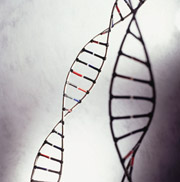
World’s Smallest Microwave Oven Will Dramatically Increase Speed of DNA Testing
Researchers in the Volgenau School of Information Technology and Engineering and the National Institute of Standards and Technology have created an instrument that will change the speed and format in which DNA samples are analyzed.
The instrument, the world’s smallest known microwave oven, is intended for use as part of lab-on-a-chip devices, which integrate multiple laboratory functions on a single piece of equipment that is only millimeters to a few square centimeters in size. The miniature microwave oven needs only a tiny amount of DNA for analysis and is more energy efficient, costs less, and produces results faster than current methodologies.
To analyze DNA currently, samples must be sent to a lab, with results taking months to get back. With the use of this new technology, results will be available in less than one hour. Although lab-on-a-chip devices are not yet available, researchers predict they will be widely in use within the next 5 to 10 years.
“When investigating a crime, time is of the essence, and by enabling law enforcement personnel to receive DNA results while still at the crime scene, we are providing them an opportunity to identify and apprehend suspects much more quickly,” says Rao Mulpuri, professor of electrical and computer engineering at Mason.
The research is supported by the Office of Science and Technology at the Department of Justice’s National Institute of Justice.
 Mason Researchers Apply New Strategies in War on Breast Cancer
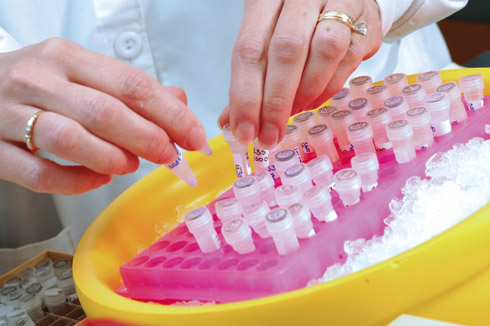
Scientists at Mason’s Center for Applied Proteomics and Molecular Medicine and clinicians at the Inova Fairfax Hospital Cancer Center will investigate living breast tissue to determine whether cancer stem cells—thought to be the driving force behind the development of cancer—are present in the earliest stages of premalignant tumors.
This is the first known research of its kind to use living, precancerous human breast tissue. The scientists are hopeful that this research will lead to new strategies for breast cancer screening and treatment. This two-year, $750,000 study is funded by the newly created Synergistic Idea Award offered through the U.S. Department of Defense Breast Cancer Research Program.
Survey Shows Republicans and Democrats Equally Likely to Perform Green Actions
Political party affiliation has little bearing on the number of green actions people take, a new study by Porter Novelli and Mason’s Center of Excellence in Climate Change Communication Research shows.
 According to the survey of more than 11,000 American adults and nearly 1,000 of their children, Democrats and Republicans differ only slightly when it comes to taking actions to protect the environment, despite great differences in their perceptions of danger related to global warming.
While Democrats were almost twice as likely as Republicans to believe that global warming is a serious problem and a threat to all life on the planet, they perform only about 15 percent more green actions than Republicans on average.
“These data tell us that in some important ways, climate change is not the partisan issue we see every day in the media,” says Ed Maibach, director of the center.
To see the full study, visit climatechange.gmu.edu.