

A Five-Minute Interview:
Biographer Jeff Broadwater
By Colleen Kearney Rich, MFA ’95
 Patriot George Mason is often left off the list of founding fathers, but in his service to the young United States, many of his peers considered him, in the words of Thomas Jefferson, “of the first order of greatness.”
George Mason played key roles in the Stamp Act Crisis, the American Revolution, and the drafting of Virginia’s first state constitution. He is perhaps best known as author of the Virginia Declaration of Rights, a document hailed as the model for the U.S. Constitution’s Bill of Rights.
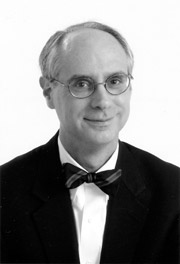
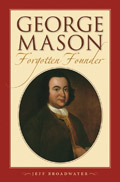 Author and historian Jeff Broadwater provides a comprehensive account of Mason’s life at the center of the momentous events of 18th-century America in his book, Forgotten Founder (University of North Carolina Press).
Broadwater is an associate professor of history at Barton College in Wilson, North Carolina. He also wrote Eisenhower and the Anti-Communist Crusade (University of North Carolina Press) and Adlai Stevenson and American Politics: The Odyssey of a Cold War Liberal (Twayne Publishers).
What made you interested in writing about George Mason?
I knew from my own teaching that Mason was an important figure in American history and something of an iconoclast, but the standard texts never really said much about him personally. That intrigued me.
While researching the book, did you find out anything about the man that surprised you?
I was surprised by just how influential Mason was among 18th-century Virginians. Only Washington clearly exceeded him in his influence among his contemporaries. I was also surprised at Mason’s mistrust of government at every level. His opposition to the Constitution is well known, but he didn’t even think much of the Fairfax County Court.
You’ve written about a number of historical figures, and George Mason didn’t leave much of a paper trail. How challenging was this book to research?
Not that difficult. It is true that there are gaps in the record, but an awful lot of material from this period has been published, including most of Mason’s surviving papers, and those published editions were enormously helpful.
You call him a Forgotten Founder. Why?
I think his efforts in organizing resistance to British rule and his authorship of the Virginia Declaration of Rights entitle him to be considered a founder, along with his role at the Philadelphia convention. He played a productive role in the convention. He was, for example, an advocate of the Great Compromise that settled the issue of representation in Congress. Even in opposition, he was productive. He began the agitation that led to the adoption of the Bill of Rights. As to being forgotten, he is simply not well known outside Virginia.